

Though now a quiet hillside town, Hiraizumi once rivaled Kyoto for its elegance and regal beauty. It was home to the northern branch of Japan’s ruling clan, the Ōshū Fujiwara, who created a vast complex of temples and gardens representing the Pure Land of Buddha on earth.
Nestled in the pine-studded mountains of Iwate, Hiraizumi today seems an unlikely rival to Kyoto, whose millennial townscape, castle, and temples still retain much of their regal glory. But in the late 11th century and most of the 12th century, this town was the economic heart of the Tōhoku region. Reigned over by the Japanese noble clan Ōshū Fujiwara, this domain derived wealth from gold mining and horse trading. It also prospered as a crossroad for goods between continental Asian states, the far northern realms of the Emishi and Ainu people (today Hokkaido), and the rest of Japan.
Once a rival to Kyoto.
Politically, the court of Hiraizumi kept its autonomy vis-à-vis the imperial court in Kyoto until the 1180s, when they caught up in a bitter feud with Minamoto no Yorimoto, who had established the Kamakura shogunate (1192 – 1333). The conflict ended in favor of the Minamoto clan, leading to the annexation of the semi-independent region.
Hiraizumi bears the unmistakable marks of the short-lived Ōshū Fujiwara dynasty, which introduced the aristocratic culture of Kyoto to this part of the country. Numerous artisans were lured to the once-wealthy city, resulting in temples, palaces, and gardens that could rival the finest ones in the imperial court. Tragically, most of them were destroyed after 1189 when Hiraizumi lost its status as the capital city. What remains include vestiges of a fascinating garden at Mōtsū-ji Temple and the famed Konjiki-do (Golden Hall) at Chūson-ji Temple, which is entirely adorned in gold leaf and mother-of-pearl.

1. Chūson-ji Temple
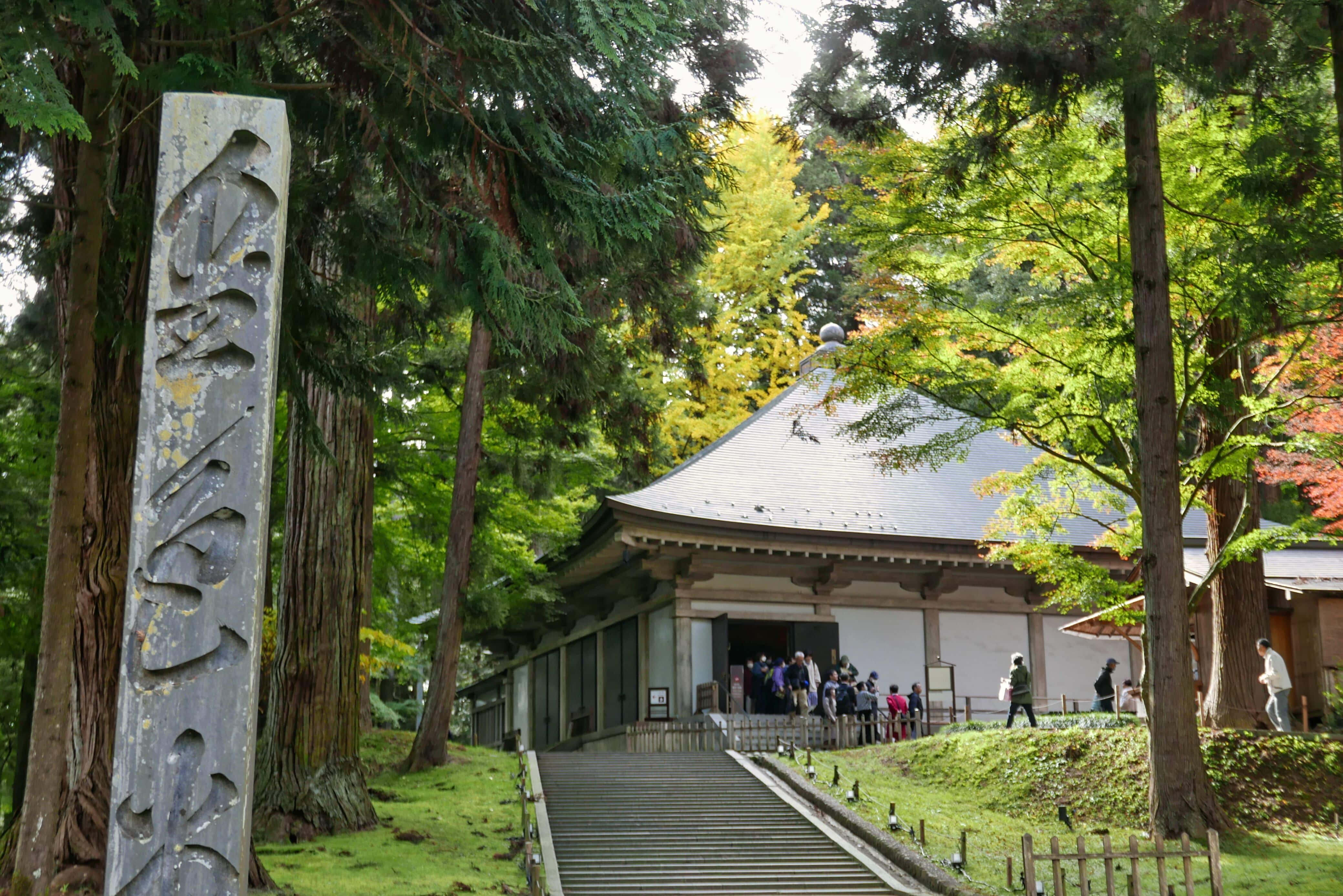
Designated as a World Heritage Site in 2011, Chūson-ji is the most renowned temple in Hiraizumi. It was reportedly founded in 850 by Jikaku Daishi as the head temple of the Tendai sect in Tōhoku. Four centuries later, Kiyohira, the first lord of the Ōshū Fujiwara clan, ordered the temple’s reconstruction, expanding it into a vast complex with more than 40 halls, pagodas, and over 300 monks’ quarters.
Chūson-ji was the embodiment of Kiyohira’s desire – a peaceful state based on the teachings of Buddha. He also proclaimed the temple complex a serene place where all souls could find comfort, friend and foe alike. Yet it was wishful thinking as Chūson-ji suffered fire devastation in 1337, destroying many structures. Miraculously, about 3,000 invaluable relics, paintings, and manuscripts survived. So did the temple’s artistic tour de force – the gilded hall of Konjiki-do.
Good to Know: The main approach to Chūson-ji is called Tsukimizaka or Moon Viewing Slope. On either side of the path are cryptomeria trees planted three to four centuries ago by the Date clan of Sendai, whose domain this was during the Tokugawa period (1603-1868).


Konjiki-do
Dating back to 1124, Konjiki-do is the only structure at Chūson-ji to survive in its original state. It represents gokuraku, or the radiant abode of Amida Nyorai – the Buddha of Infinite Light – and was constructed using the most sophisticated techniques of the time.
As its name implies, the hall is entirely coated with lacquer containing gold foil, from the walls, the ceilings, and the floors to the tie beams. The inner sanctuary is even more awe-inspiring, lavishly ornamented with lustrous white shell inlays, engraved metal fittings, and gold-sprinkled lacquer – a pinnacle of Heian Buddhist art. Numerous Buddha statues stand solemnly inside. All are gilded and intricately inlaid with ivory and mother-of-pearl.
Konjiki-do also demonstrates the gold culture of Hiraizumi and the refinement of the Ōshū Fujiwara clan during their golden age. It served, therefore, as a mausoleum for the clan’s first three lords. They were enshrined beneath the altars with peacock motifs, reposing in their gilded paradise for eternity.
A pinnacle of Heian Buddhist art.
Good to Know: Konjiki-do is housed in a wooden structure dating to 1965. It’s surrounded by a concrete sheath completed with glass walls. Right next to the hall is the Sankōzō Museum containing the cultural assets excavated at Hiraizumi. Photography is strictly prohibited inside both buildings.


2. Mōtsū-ji Temple
Kiyohira’s vision of a peaceful land was inherited by his son Motohira, who commissioned an equally grand monastery, the Mōtsū-ji. Like Chūson-ji, the temple was founded by Jikaku Daisu in 850 but later revamped by the second lord. The project was only completed under the reign of the third-generation leader of the Ōshū Fujiwara clan, Hidehira.
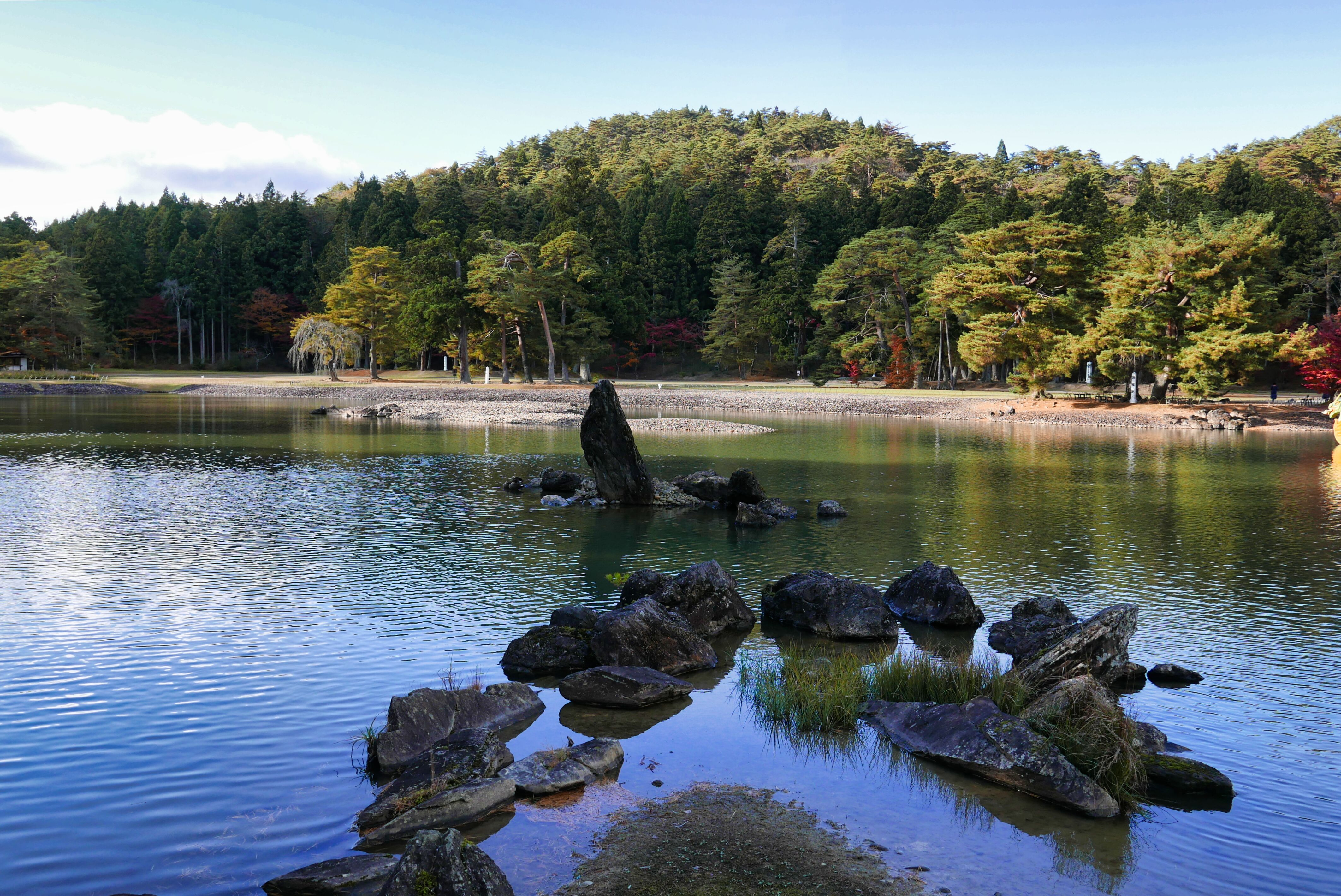
With 40 structures and 500 monks’ quarters, Mōtsū-ji eclipsed nearby Chūson-ji in scale and grandeur. But following the demise of the Ōshū Fujiwara, nearly all buildings were consumed by flame. Only the Pure Land Garden and its central pond, called Oizumi-ga-Ike, remained unchanged for more than 800 years, thanks to locals who kept reconstructing the grounds to emulate its initial appearance.


The Pure Land Garden
The Pure Land Garden of Mōtsū-ji depicts a Buddhist paradise through the careful arrangement of various elements in relation to the pond. It bears the traces of Sakuteiki, Japan’s oldest garden-making instructions written in the 11th century. It features majestic trees, islands, streams, wavy pebble peninsulas, and rugged rocks that supposedly mimic the dramatic coastline of Iwate. A hashibiki ishi (anchoring stone), more than two meters high, protruding from the lake’s surface, is the most prominent piece of the garden. It’s tilted at exactly the right angle to balance the broad expanse of the water.
On the pond’s northern side are remnants of the original kondo (main hall), including a bell tower and a sutra repository. Meanwhile, a new hall was erected southward of the pond. It was completed in 1989 and is faithful to the Heian-style architecture. The Pure Land Garden represents a design that is unique to Japan, fusing characteristics of Asian gardens with Buddhist and Shintoist principles. The gardens and temples of Hiraizumi later inspired various structures across Japan, especially in Kamakura.


Tips for visiting Hiraizumi
- Hiraizumi can be reached by JR local train from Ichinoseki. It takes only eight minutes. Please note that there are one or two trains per hour. Alternatively, you can catch a taxi outside Ichinoseki station. This option costs about 3,300¥ but spares you the walk from the station to the temples.
- Ichinoseki is located on the Tōhoku Shinkansen line and thus easily accessible from Tokyo (2 hours 40 minutes) or Sendai (30 minutes).
- Mōtsū-ji is just a stone’s throw away from the station, while the walk to Chūson-ji is longer and slightly uphill. It takes approximately 20-30 minutes.
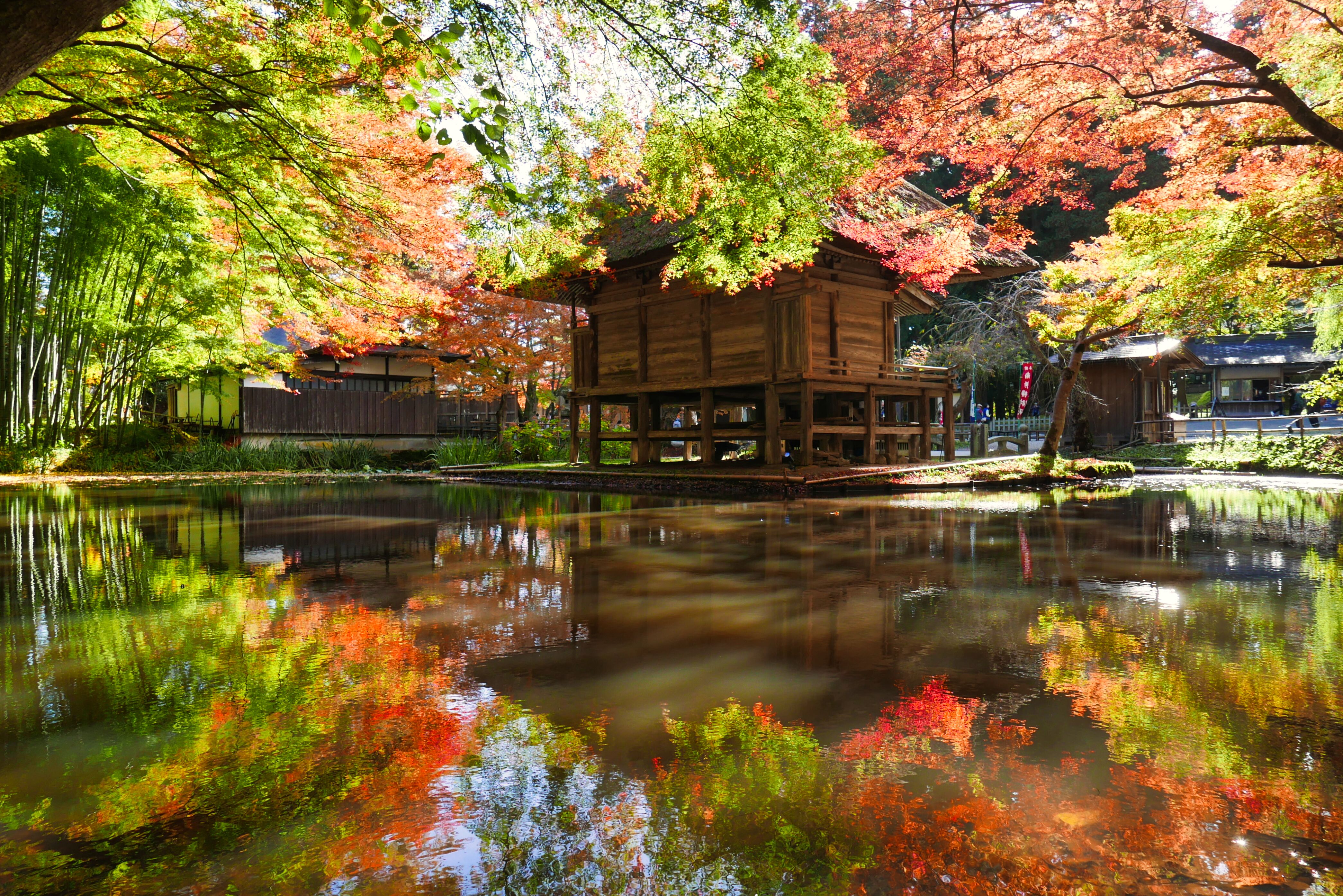
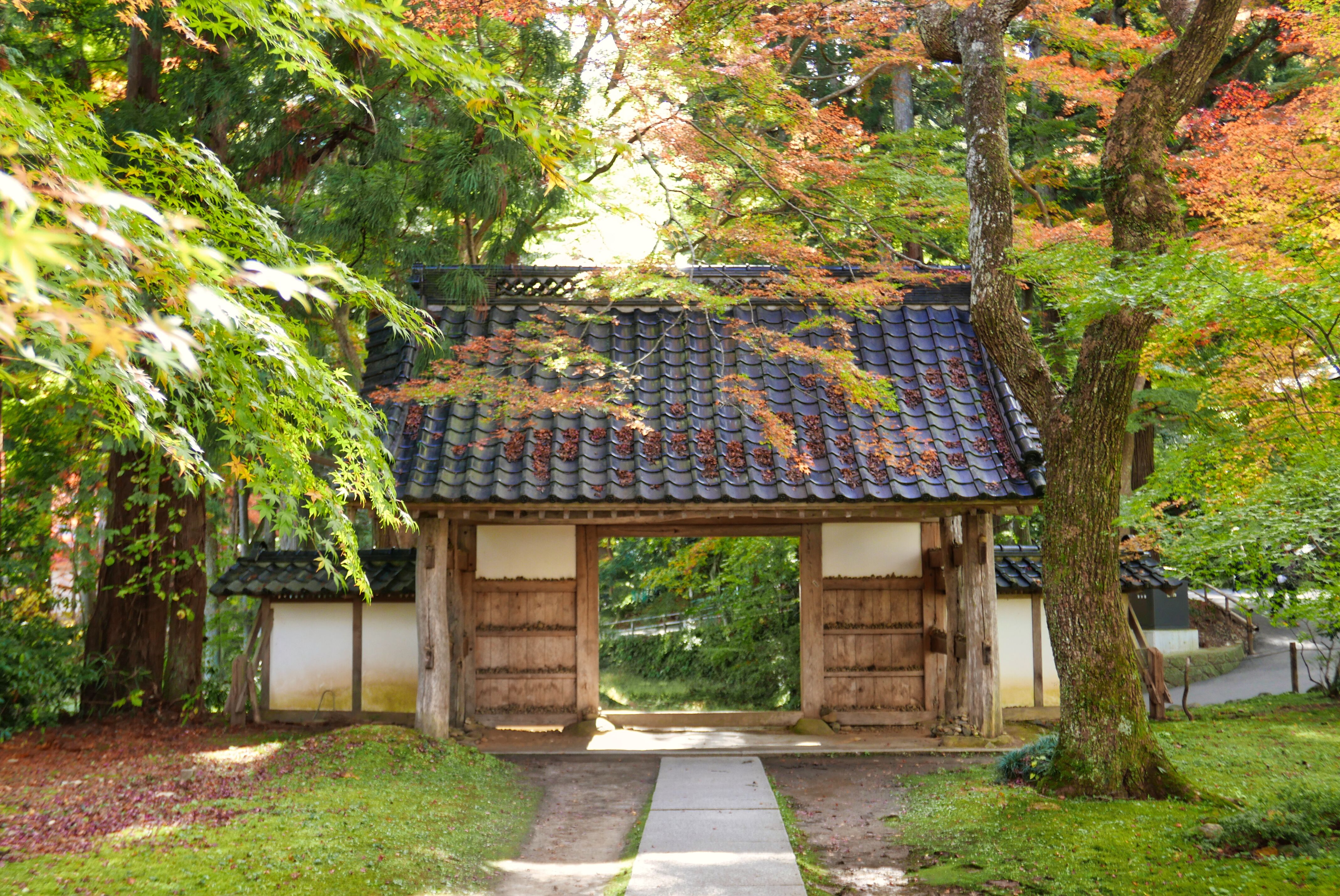
- Hiraizumi temples are particularly beautiful in autumn when the Japanese maple trees are turning fiery red.


I was just there in July!
A fascinating place, isn’t it? And not so crowded 🙂 Did you also go to the Tanabata Festival in Sendai? I heard it’s the most impressive in the country.
I was too early for that. I was also in Aomori so I went to the Nebuta festival Museum.
I love that place! So unique.
I wasn’t aware of Hiraizumi before, but its place in history and the vestiges from that period when it was the capital of the Ōshū Fujiwara make this place very appealing to visit. As of timing, you really know when to go. Those autumn colors are sublime! If only the other structures survived to this day.
Sadly yes 🙁 However, the Golden Hall and the artifacts are more than enough to showcase the skills of the artisans during this period. The autumn foliage in Hiraizumi is beautiful, and it’s not overwhelmed by tourists like in Kyoto.
For me the interesting part of Hiraizumi is that the Fujiwara intermarried with the Emishi people who were already established in that area. The origins of the Emishi are a bit of a mystery. Not ethnic Japanese